
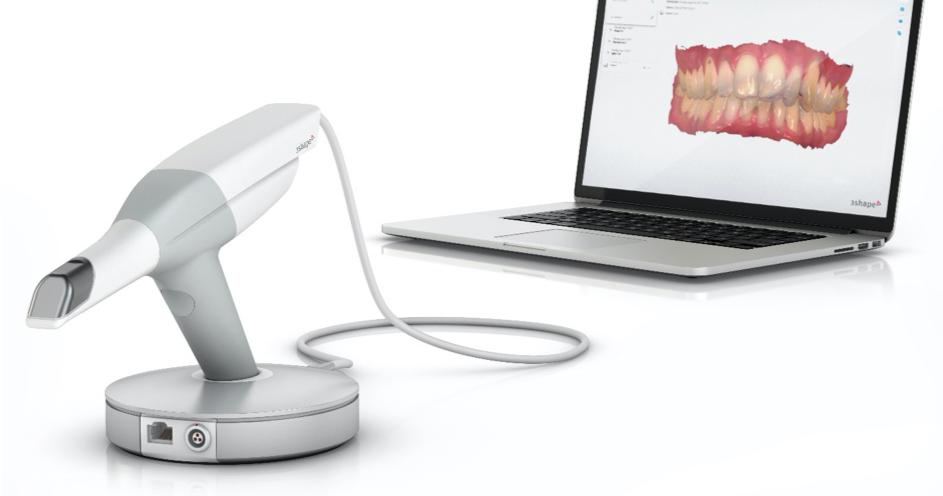
During dental treatment, it is often necessary to take an impression of the patient's teeth using impression material. The first impression taken at the dental practice is a situation impression, which records the actual condition of the teeth before treatment begins. Similarly, in orthodontic and prosthetic work, an impression of the teeth is essential for the manufacture of suitable dentures or splints. In many cases, the gag reflex or the unpleasant taste of the impression materials are an obstacle to the smooth execution of the procedure.
In many cases, the use of an intraoral scanner can avoid the need for impressions. The technology is now so well developed that it can be used for a wide range of indications.
The rows of teeth are determined with the aid of a small camera and the laser and optical systems built into it. A 3D model is created in real time on the screen during the digital impression and is later used for diagnosis, planning, and further processing, as well as for documentation and archiving. Minor corrections can be easily rescanned and do not require further impressions to be taken, as is the case with the conventional method. The situation is clearly presented to the patient, improving doctor-patient communication and acceptance of the treatment plan.